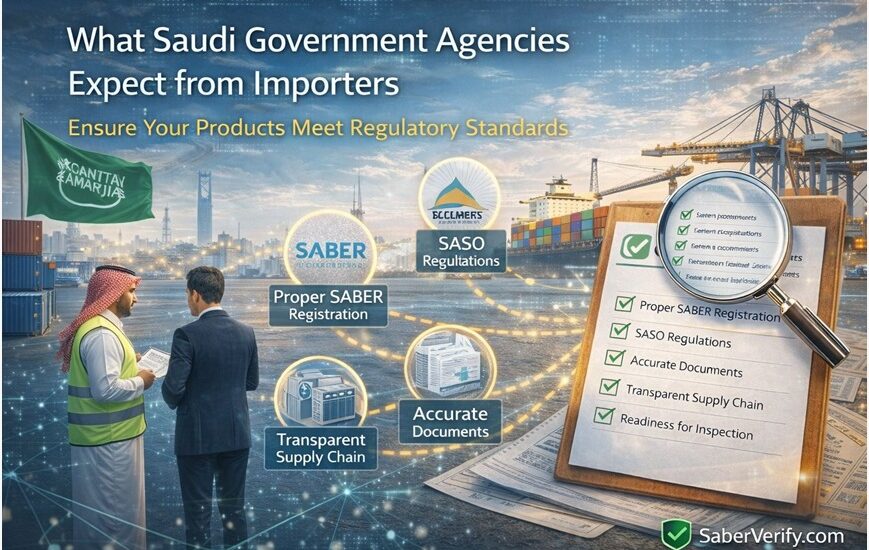
Importing products into Saudi Arabia involves more than preparing shipping documents. Importers need to understand the product requirements that apply, keep product and shipment information consistent, and complete the relevant conformity or regulatory steps before customs clearance.
Requirements vary by product and regulatory scope, so the correct route should be identified case by case.
What Importers Need to Get Right
Saudi authorities generally focus on the following areas when reviewing import applications:
- Confirming basic product safety
- Reducing the likelihood of non-conforming products entering the market
- Supporting orderly regulation of the Saudi market
- Protecting consumers
For this reason, the Saber platform is a central part of most import operations into the Kingdom.
Product Classification and Regulatory Scope
Saudi authorities look closely at how a product is registered and classified in the Saber platform, including:
- Accuracy of the product data provided
- Correct classification of the product
- Whether the product falls within a regulated or non-regulated scope
The HS code is an important classification input, but regulatory applicability may also depend on the product’s characteristics, intended use, technical scope, and current Saudi requirements. Errors or inconsistencies at this stage can lead to delays or requests for clarification.
Product and Manufacturer Information
Importers are expected to provide accurate and consistent information about the product and its origin, including:
- The actual country of origin
- Accurate factory and manufacturer data
- Consistency with the product’s actual source
Inconsistencies in this information can lead to regulatory queries or delays in processing.
Technical and Commercial Documentation
Saudi authorities generally expect consistency across the documentation submitted for a shipment, which may include:
- Commercial invoice
- Certificate of origin
- Bill of lading
- Saber platform data
Discrepancies between these documents are a common cause of delays during review.
SABER and Conformity Requirements
Depending on the product and applicable regulation, requirements may include:
- Compliance with the applicable SASO technical regulations and standards
- Providing test reports from a recognized or accredited laboratory where required
- Completing the applicable SABER route through a SASO-accepted conformity assessment body, where third-party assessment applies
SaberVerify helps identify which of these requirements apply to a specific product rather than applying a single process to every shipment.
Shipment Readiness and Customs Review
For some products, additional steps such as laboratory testing, consignment inspection, or further review before clearance may apply. Preparing for these possibilities in advance can help reduce delays later in the process.
Correct conformity and shipment documentation can support customs-clearance readiness, but final customs decisions remain with the relevant authorities.
Common Mistakes to Avoid
- Shipping before completing the applicable Saber platform requirements
- Relying on supplier-provided information without independent review
- Choosing a conformity assessment body that is not SASO-accepted
- Not accounting for updates to applicable regulations
These errors can lead to delays, additional costs, or requests for clarification.
How SaberVerify Supports Importers
SaberVerify supports importers by reviewing product information, classification, documentation, and the likely Saudi conformity route before submission or shipment.
Where third-party assessment is required, we can also support coordination with a SASO-accepted conformity assessment body.
Related resources: Our Services · SABER Certificate · Export to Saudi Arabia · FAQ
Need Help Reviewing Your Import Requirements?
Tell us about your product and shipment and we’ll help you understand the Saudi conformity and market-access requirements that may apply.